Oddball winter weather hurts ski industry
June 21, 2006
By Bruce Edwards : Rutland Herald Staff
Faced with challenging weather, skier visits in Vermont fell 6 percent this season, the Vermont Ski Areas Association announced Tuesday at its annual meeting.
The state's 17 downhill ski areas recorded 4,147,467 skier visits for the 2005-06 season compared to last year's 4.4 million visits, the association said. Despite the decline, Vermont remains the No. 3 ski state behind Colorado and California.
"The past season was certainly a challenging one for the industry," said Parker Riehle, president of the Vermont Ski Areas Association, in a statement. "With our resorts' ever-improving snowmaking and grooming capabilities, we were able to survive the wildly variable weather patterns that seemed to hit hardest during our key holiday periods and finish the season stronger than many had predicted."
While overall skier visits were down 6 percent in the state, some resorts fared worse than others, including Killington/Pico, which saw its skier visits tumble by 19 percent.
Skier visits at Mount Snow in Dover dropped nearly 18 percent. Both resorts are owned by American Skiing Co., which reported last week an overall decline in skier visits at its seven resorts of 6.9 percent. Skier visits at its five Eastern resorts fell 15 percent.
The company, which posted a fiscal third quarter profit, said its eastern resorts "were challenged by adverse weather conditions for much of the latter half of the ski season."
"It was the toughest season we've faced weather-wise in Killington's history," said Killington spokesman Tom Horrocks in an interview last week. "(There were) numerous freeze/thaw cycles, rain on key weekends, like Martin Luther King weekend and Presidents (Day) weekend, and that has a pretty significant impact on the drive-up skier market."
Thanks to Vermont's reputation, however, Riehle said Vermont fared "much better than the rest of the Northeast, which was down 9 percent from last year."
The ski industry is considered one of the state's key economic drivers contributing more than $1.5 billion annually to the state's economy.
At the association's annual meeting Tuesday, held at Killington Resort, longtime ski industry veteran Dave Wilcox and sports event producer Bernie Weichsel were honored for contributions to the state's ski industry. Wilcox received the Industry Achievement Award and Weichsel received the Friend of the Industry Award.
Vermont skier visits for the past five seasons:
2005-06, 4.1 million.
2004-05, 4.4 million.
2003-04, 4.2 million.
2002-03, 4.4 million.
2001-02, 4.1 million.
Thursday, June 22, 2006
A rough winter for the Vermont ski industy


Wednesday, June 21, 2006
Buyers dig up timeshare deals
Something interesting from the Aspen Times. Normally I would say these things are total rip offs designed to separate foolish tourists from their money and line the pockets of real estate promoters. However in the secondary market, in highly limited land use areas, they may not be as bad as I thought. I still think it's better to simply rent for a week if this is the kind of thing you are looking for. In just about all ski areas you can get a 1 bedroom condo for the week for $1000-$2000 which is going only a little bit more than the maintenance / fees with a time share and you don't have the intial outlay of capital to buy a highly illiquid asset.
---------------------------
By Janet Urquhart June 19, 2006
The secret's out.The Prospector, Aspen's oldest timeshare property, is suddenly getting notice, as a wave of new fractional/timeshare properties capture interest from visitors looking to own a piece of Aspen.But instead of prices that range in the hundreds of thousands of dollars to, in some cases, more than $1 million per share, Prospector sales are popping up in the weekly tally of Pitkin County real estate transactions for sums like $10,000 or $25,000."It's the greatest segue into Aspen, and people are starting to figure it out," said Mary Anne Meyer, a broker with Mason & Morse who had a couple of Prospector shares listed for $18,000 apiece. Both sold. "It's just this secret that's out now."Earlier this month, one share in each of two different units went to the same buyer for a total of $45,000. The two shares come with six weeks of use altogether, including the Christmas holiday this year.Another owner has offered four shares for sale in three different units. The total package is $300,000, but the deal offers 12 prime-time weeks, including Christmas and the Aspen Food & Wine weekend.The timeshare hotel on Hyman Avenue has 19 one-bedroom, two-bath condos, though the units are also each furnished with a Murphy bed and sleeper sofa to accommodate additional guests.When it opened in 1983, with 285 shares available to sell, it was the first of its kind in Aspen. More than two decades later, six of those original shares - all for low-demand weeks - are still available, according to manager Scott Kirkwood. But when he took on oversight of The Prospector five years ago, there were roughly 50 unsold shares."The Prospector is doing better than it's ever done," Kirkwood said. "It's the best deal in town and has been for quite a while. People are buying two, three and four [shares], and they're looking for more.
"Out-of-state brokers have also picked up unsold shares, good for stays in months such as November, which hints of speculative buying, Kirkwood noted. There's no indication that one entity is buying up shares with the aim of taking control, but the expectation that it could happen might explain the interest in shares deep in the offseason.If one buyer amasses 67 percent of the shares, the remaining shareholders could be forced to sell out, presumably leaving the property in the control of someone looking to redevelop it.Step out onto one of The Prospector's back balconies (each unit has its own balcony and hot tub), or its rooftop patio, and it's easy to see the property's true value. Backed up against Wagner Park, it offers a front-and-center view of Aspen Mountain protected by a city park."The views are guaranteed," Kirkwood said.
Janet Urquhart's e-mail address is janet@aspentimes.com
PS: It's a long long shot, but someone is trying to build a new ski resort by Snowbasin in Utah: A new Utah resort?
---------------------------
By Janet Urquhart June 19, 2006
The secret's out.The Prospector, Aspen's oldest timeshare property, is suddenly getting notice, as a wave of new fractional/timeshare properties capture interest from visitors looking to own a piece of Aspen.But instead of prices that range in the hundreds of thousands of dollars to, in some cases, more than $1 million per share, Prospector sales are popping up in the weekly tally of Pitkin County real estate transactions for sums like $10,000 or $25,000."It's the greatest segue into Aspen, and people are starting to figure it out," said Mary Anne Meyer, a broker
with Mason & Morse who had a couple of Prospector shares listed for $18,000 apiece. Both sold. "It's just this secret that's out now."Earlier this month, one share in each of two different units went to the same buyer for a total of $45,000. The two shares come with six weeks of use altogether, including the Christmas holiday this year.Another owner has offered four shares for sale in three different units. The total package is $300,000, but the deal offers 12 prime-time weeks, including Christmas and the Aspen Food & Wine weekend.The timeshare hotel on Hyman Avenue has 19 one-bedroom, two-bath condos, though the units are also each furnished with a Murphy bed and sleeper sofa to accommodate additional guests.When it opened in 1983, with 285 shares available to sell, it was the first of its kind in Aspen. More than two decades later, six of those original shares - all for low-demand weeks - are still available, according to manager Scott Kirkwood. But when he took on oversight of The Prospector five years ago, there were roughly 50 unsold shares."The Prospector is doing better than it's ever done," Kirkwood said. "It's the best deal in town and has been for quite a while. People are buying two, three and four [shares], and they're looking for more."Out-of-state brokers have also picked up unsold shares, good for stays in months such as November, which hints of speculative buying, Kirkwood noted. There's no indication that one entity is buying up shares with the aim of taking control, but the expectation that it could happen might explain the interest in shares deep in the offseason.If one buyer amasses 67 percent of the shares, the remaining shareholders could be forced to sell out, presumably leaving the property in the control of someone looking to redevelop it.Step out onto one of The Prospector's back balconies (each unit has its own balcony and hot tub), or its rooftop patio, and it's easy to see the property's true value. Backed up against Wagner Park, it offers a front-and-center view of Aspen Mountain protected by a city park."The views are guaranteed," Kirkwood said.
Janet Urquhart's e-mail address is janet@aspentimes.com
PS: It's a long long shot, but someone is trying to build a new ski resort by Snowbasin in Utah: A new Utah resort?
Tuesday, June 20, 2006
A crackdown on "Affordable Housing" violaters
Breck affordable housing scofflaws cop plea deal
A deed-restricted home in the Wellington Neighborhood of Breckenridge, formerly owned by Indiana couple Kirk and Pam Alter, was at the center of a recent local prosecution for violations of the town's affordable housing covenants. The Alters pleaded no contest to the charges, and forfeited the profits made from the sale of the home, in addition to paying town attorney's fees.
Summit Daily/Brad Odekirk
BY HARRIET HAMILTON June 19, 2006 BRECKENRIDGE -
In a potentially precedent-setting case, Breckenridge municipal court Judge Buck Allen accepted a plea agreement from the Indiana couple charged with violating town affordable housing covenants two days before the case was set to go to trial.As required by the agreement, Kirk and Pam Alter pleaded "no contest" last week to the criminal charges and agreed to reimburse the town the profit they realized when they sold the property at 11 Rodeo Drive, in addition to $2,500 for town attorney fees. The terms of the agreement stipulate the money must be paid within 30 days and that final judgment in the case will be deferred for one year, on the condition that neither incurs other criminal charges during that period.Kirk Alter, a professor at Purdue University, and his wife Pam bought the deed-restricted single-family house in the Wellington Neighborhood in July 2004. The Alters paid $305,000 for the new two-story, three-bedroom, two-bath home. At the time, the couple signed an affidavit stating that one of them was employed within Summit County at least 30 hours a week.
During the 18 months the Alters owned the house, it appeared they only visited the neighborhood a few times, town prosecutor Seth Murphy said. Breckenridge filed criminal charges against both Kirk and Pam last fall after unsuccessfully trying to contact the couple. "Under the town code, it's a criminal violation," Murphy said. "Under the code they could have been assessed up to $100 a day (for every day they didn't live in the house)." Because both Kirk or Pam were charged individually, fine amounts against them could have amounted to more than $100,000.In response to the town action, the Alters hired an attorney and filed motions challenging the legality of the prosecution.
In January, with the case still pending, they sold the house to a local family for $379,000. After subtracting the cost of a two-car garage added while they owned the house and Realtor's fees, the Alters took home $13,021 in profit, which must now be returned to the town. The couple's attorney, Paul Dunkleman, blamed poor communication for the misunderstanding."They bought the property with the intention to live and work full-time in Breckenridge," Dunkleman said. "But personal and professional issues made that difficult. And communication (with the town) was a problem."Dunkleman went on to say that his clients never had any interest in violating town covenants."Regardless of how this may appear, they do feel strongly about employee housing," he said.
The Alter case marks the first time criminal charges have been brought in Summit County for an alleged violation of affordable housing covenants. Breckenridge's aggressive pursuit of the judgment stemmed from the town council's commitment to attainable housing, Mayor Ernie Blake said."You just can't have a house that you work so hard to put in place and have it not be utilized," Blake said. "It becomes a big deal." According to Blake, the decision to accept the Alters' plea was not taken lightly by the council."We didn't want to run the risk of not prevailing in a real way," Blake said, referring to the possibility of a potential jury acquittal.Sharyn Steiner, president of the Wellington Neighborhood homeowners' association, which represents nearly 120 households, expressed her satisfaction with the outcome. Enforcement of the affidavit system is vital to maintain the area's character, she said."Otherwise it'll turn into every other neighborhood," she added. "What I love about living here is that it's very much like old-town Breckenridge, before the town got so big."
Affordable housing enforcement in the High Country
In contrast to the 350 or so deed-restricted units monitored by the Summit Housing Authority, Aspen's affordable housing agency is responsible for more than 2,500 units. The Aspen/Pitkin County Housing Authority employs a full-time person to monitor compliance and qualification, executive director Tom McCabe said."We have a scarce commodity and people are desperate to get into affordable housing here," he said. "And they act in a desperate way."McCabe said attorneys working for the Housing Authority have at least one or two civil actions against violators going at all times. Violators are often forced to sell, but his office has yet to file any criminal charges like those filed against the Alters."We always manage to work it out one way or the other," he said. McCabe went on to say every case gives his agency more information about how to prevent non-residents from taking advantage of the affordable housing system.
Improved computer technology has allowed the Aspen-area housing authority to be much more thorough when vetting potential buyers, he added."It's becoming more and more difficult to scam us," he said.Eagle County director of housing K.T. Gazunis admits that intentional violations of affordable housing deed restrictions are also a problem for her office, but that formal legal action has not yet been required to deal with those taking advantage of the system."So far, we've not had to take anyone to court," she said. "Strongly worded letters from attorneys have been enough." Gazunis' office also has a full-time employee responsible for compliance enforcement. In addition to sending out and checking annual affidavits, the agency also randomly audits 25 percent of its units, using methods such as calling employers.Judge Allen, who serves as municipal court judge in Vail as well as Breckenridge, said the Alter case may have an impact on other towns' approach to deed restriction violators."The town attorney over in Vail is going to be looking at what has happened here," Allen said.The affordable housing crunch is not unique to the Colorado mountains. Wealthy baby boomers are affecting housing in many markets. McCabe said his Aspen office receives inquiries about how to deal with violators from as far away as Florida and Hawaii."All over the country, when you have an attractive community, the second-homeowner market is starting to crowd out the workforce," he added.
A deed-restricted home in the Wellington Neighborhood of Breckenridge, formerly owned by Indiana couple Kirk and Pam Alter, was at the center of a recent local prosecution for violations of the town's affordable housing covenants. The Alters pleaded no contest to the charges, and forfeited the profits made from the sale of the home, in addition to paying town attorney's fees.
Summit Daily/Brad Odekirk
BY HARRIET HAMILTON June 19, 2006 BRECKENRIDGE -
In a potentially precedent-setting case, Breckenridge municipal court Judge Buck Allen accepted a plea agreement from the Indiana couple charged with violating town affordable housing covenants two days before the case was set to go to trial.As required by the agreement, Kirk and Pam Alter pleaded "no contest" last week to the criminal charges and agreed to reimburse the town the profit they realized when they sold the property at 11 Rodeo Drive, in addition to $2,500 for town attorney fees. The terms of the agreement stipulate the money must be paid within 30 days and that final judgment in the case will be deferred for one year, on the condition that neither incurs other criminal charges during that period.Kirk Alter, a professor at Purdue University, and his wife Pam bought the deed-restricted single-family house in the Wellington Neighborhood in July 2004. The Alters paid $305,000 for the new two-story, three-bedroom, two-bath home. At the time, the couple signed an affidavit stating that one of them was employed within Summit County at least 30 hours a week.
During the 18 months the Alters owned the house, it appeared they only visited the neighborhood a few times, town prosecutor Seth Murphy said. Breckenridge filed criminal charges against both Kirk and Pam last fall after unsuccessfully trying to contact the couple. "Under the town code, it's a criminal violation," Murphy said. "Under the code they could have been assessed up to $100 a day (for every day they didn't live in the house)." Because both Kirk or Pam were charged individually, fine amounts against them could have amounted to more than $100,000.In response to the town action, the Alters hired an attorney and filed motions challenging the legality of the prosecution.
In January, with the case still pending, they sold the house to a local family for $379,000. After subtracting the cost of a two-car garage added while they owned the house and Realtor's fees, the Alters took home $13,021 in profit, which must now be returned to the town. The couple's attorney, Paul Dunkleman, blamed poor communication for the misunderstanding."They bought the property with the intention to live and work full-time in Breckenridge," Dunkleman said. "But personal and professional issues made that difficult. And communication (with the town) was a problem."Dunkleman went on to say that his clients never had any interest in violating town covenants."Regardless of how this may appear, they do feel strongly about employee housing," he said.
The Alter case marks the first time criminal charges have been brought in Summit County for an alleged violation of affordable housing covenants. Breckenridge's aggressive pursuit of the judgment stemmed from the town council's commitment to attainable housing, Mayor Ernie Blake said."You just can't have a house that you work so hard to put in place and have it not be utilized," Blake said. "It becomes a big deal." According to Blake, the decision to accept the Alters' plea was not taken lightly by the council."We didn't want to run the risk of not prevailing in a real way," Blake said, referring to the possibility of a potential jury acquittal.Sharyn Steiner, president of the Wellington Neighborhood homeowners' association, which represents nearly 120 households, expressed her satisfaction with the outcome. Enforcement of the affidavit system is vital to maintain the area's character, she said."Otherwise it'll turn into every other neighborhood," she added. "What I love about living here is that it's very much like old-town Breckenridge, before the town got so big."
Affordable housing enforcement in the High Country
In contrast to the 350 or so deed-restricted units monitored by the Summit Housing Authority, Aspen's affordable housing agency is responsible for more than 2,500 units. The Aspen/Pitkin County Housing Authority employs a full-time person to monitor compliance and qualification, executive director Tom McCabe said."We have a scarce commodity and people are desperate to get into affordable housing here," he said. "And they act in a desperate way."McCabe said attorneys working for the Housing Authority have at least one or two civil actions against violators going at all times. Violators are often forced to sell, but his office has yet to file any criminal charges like those filed against the Alters."We always manage to work it out one way or the other," he said. McCabe went on to say every case gives his agency more information about how to prevent non-residents from taking advantage of the affordable housing system.
Improved computer technology has allowed the Aspen-area housing authority to be much more thorough when vetting potential buyers, he added."It's becoming more and more difficult to scam us," he said.Eagle County director of housing K.T. Gazunis admits that intentional violations of affordable housing deed restrictions are also a problem for her office, but that formal legal action has not yet been required to deal with those taking advantage of the system."So far, we've not had to take anyone to court," she said. "Strongly worded letters from attorneys have been enough." Gazunis' office also has a full-time employee responsible for compliance enforcement. In addition to sending out and checking annual affidavits, the agency also randomly audits 25 percent of its units, using methods such as calling employers.Judge Allen, who serves as municipal court judge in Vail as well as Breckenridge, said the Alter case may have an impact on other towns' approach to deed restriction violators."The town attorney over in Vail is going to be looking at what has happened here," Allen said.The affordable housing crunch is not unique to the Colorado mountains. Wealthy baby boomers are affecting housing in many markets. McCabe said his Aspen office receives inquiries about how to deal with violators from as far away as Florida and Hawaii."All over the country, when you have an attractive community, the second-homeowner market is starting to crowd out the workforce," he added.
Monday, June 19, 2006
More good news
 In addition to ski season starting in Chile -- and someone, somewhere enjoying sports in the mountains -- I have some other good news to share.
Jennifer and I are engaged, with plans to be married next year. We haven't figured out each and every detail yet, but as we figure them out we'll keep friends and family posted.
Here's a picture "I" took of us using my ever present Canon ELPH's timer function.
Friday, June 16, 2006
Joyous News for Chileans : Ski Season Starts Tomorrow !
Chile forecasts 15% more visitors for ski season
Although they are still worried whether or not sufficient snow will fall by the time the ski season begins, Chile’s ski industry expects are predicting a 15% increase in visitors during this year’s season in Chile.
Massive investments during the off-season and strong preseason ticket sales suggest a lucrative season well into October.
 “The lack of rain has not affected us. In roughly 50% of our years of operation, we have not had any snow by June 1” said Ski Center Association President Miguel Purcell. Purcell also stressed that most ski resorts already have a solid 60 centimeter snow base as a result of last weekend’s heavy rainfall, and are expecting greater precipitation within the next few days.
Ski resorts in and around Santiago have some of the most positive forecasts about the amount of expected skiers. Valle Nevado expects140.000 visitors this year, of which 50.000 will stay for an extended period of time at their hotel. American pop star Britney Spears is even rumored to be coming to Chile on holiday.
“For this season, we expect more than 90% occupation,” said Jaime Vial, a commercial manager at Valle Nevado. El Colorado’s general manager Eduardo Kuhn anticipates similar results at his resort, especially since preseason ticket sales are up a solid 30% over this time last year.
Outside of the Santiago area, employees at Region VII’s Chillán hot springs are also looking forward to a strong ski season. Rodrigo Bravo, commercial manager at Chillán Hot Springs, emphasizes his resort’s advantage as the “only ski and spa resort in the area.” Chile’s Andean ski resorts attract visitors from all over the world but the majority comes from Brazil, the United States and Argentina.
By Matt Malinowski The Santiago Times - News about Chile
Although they are still worried whether or not sufficient snow will fall by the time the ski season begins, Chile’s ski industry expects are predicting a 15% increase in visitors during this year’s season in Chile.
Massive investments during the off-season and strong preseason ticket sales suggest a lucrative season well into October.
“The lack of rain has not affected us. In roughly 50% of our years of operation, we have not had any snow by June 1” said Ski Center Association President Miguel Purcell. Purcell also stressed that most ski resorts already have a solid 60 centimeter snow base as a result of last weekend’s heavy rainfall, and are expecting greater precipitation within the next few days.Ski resorts in and around Santiago have some of the most positive forecasts about the amount of expected skiers. Valle Nevado expects140.000 visitors this year, of which 50.000 will stay for an extended period of time at their hotel. American pop star Britney Spears is even rumored to be coming to Chile on holiday.
“For this season, we expect more than 90% occupation,” said Jaime Vial, a commercial manager at Valle Nevado. El Colorado’s general manager Eduardo Kuhn anticipates similar results at his resort, especially since preseason ticket sales are up a solid 30% over this time last year.
Outside of the Santiago area, employees at Region VII’s Chillán hot springs are also looking forward to a strong ski season. Rodrigo Bravo, commercial manager at Chillán Hot Springs, emphasizes his resort’s advantage as the “only ski and spa resort in the area.” Chile’s Andean ski resorts attract visitors from all over the world but the majority comes from Brazil, the United States and Argentina.
By Matt Malinowski The Santiago Times - News about Chile
Thursday, June 15, 2006
Ski instructor busted

Heh. I guess the droits de ski instructor are now frowned upon. What an idiot.
-----------------------------
Ski instructor accused of raping student
BY THE ASSOCIATED PRESS
June 14, 2006
BEAVER CREEK - A veteran Beaver Creek ski instructor has been jailed on $50,000 bond for allegedly raping a 17-year-old girl after the two skied together over the winter.
According to authorities, David Lorenzen confessed to the rape during a telephone call with the girl that was set up by police. He did not immediately return a message left for him at the jail Wednesday.
Lorenzen, 43, took the girl skiing during of his days off in January while she was vacationing from Palm Beach, Fla. The police report said the two skied a run and she agreed to have a beer with him. He took her to his apartment where he showed her pornographic videos, gave her alcohol and later raped her despite her protests, authorities said.
"It seemed like this was a plan," Avon police Detective Paul Arnold said.
The girl's family had used Lorenzen as a ski instructor before and he was tipped $100 by the girl's unknowing mother after the alleged attack, police said. Police say the parents learned of the incident from a cousin.
Lorenzen has worked at Beaver Creek since 1988. He has an arrest record that includes four DUIs, possession of marijuana, trespassing, criminal mischief and attempted vehicle theft.
Vail Resorts CEO Robert Katz said the company was "appalled and deeply saddened by the allegations."
"Beaver Creek is a world-class family resort committed to continuing to operate at the highest standards," he said. "The alleged conduct is abhorrent to what our resorts stand for."
Lorenzen also faces charges of second-degree kidnapping and contributing to the delinquency of a minor, Arnold said.
--------------------------
PS: Another flying basset here , although not much altitude.
Tuesday, June 13, 2006
Snowmass starts summer of construction
Snowmass starts summer of construction
Sounds of development are everywhere as events begin
By Joel Stonington (From the Aspen Times)
June 12, 2006
This is not exactly the summer of peace and quiet in Snowmass.
As the stage went up on Fanny Hill for the third annual Chili and Brew Festival on Friday, the sounds of construction were overwhelming. The noise came from the base, where backhoes, dump trucks and other big machines are working on the hole that will become Base Village.
As Snowmass kicks off summer with more events than ever before - Chili and Brew Festival, Snowmass Rodeo, Friday night outdoor movies, Thursday free music series - there is an air of cautious optimism about all the construction going on at Base Village and elsewhere in Snowmass.
Early signs point to the idea that the mall may suffer more than the Snowmass Center, where restaurants are noting an uptick in offseason sales from construction workers buying meals.
"It's a huge offseason benefit to us to have the project going," said Chuck Zeitz, owner of the Wildcat Cafe in Snowmass Center. Because the cafe is a sit-down restaurant, it is getting many planners and managers who have accounted for roughly 25 extra meals a day.
"It's the difference between really taking an offseason beating and sort of taking an offseason beating," he said.
The Village Market, the supermarket at Snowmass Center, has noticed no major change in sales during the last few months. Manager J. Potter commented said the store's 6 percent increase in sales is average from year to year.
The mall tends to get more tourist activity while the Snowmass Center sees a larger percentage of locals. So construction on certain condominiums has a greater affect on the mall while road and bike path closures tend to affect Snowmass Center.
"I'm waiting to see how the summer goes," said Stacy "Taster" Forster, owner of Taster's in Snowmass Center, who also noted that construction has been good for business so far. "We've never had a project of this size in full swing."
Up in the mall, there wasn't nearly the positive attitude about construction. Though most people said it's still to early to tell what the affect will be, there is a bit more apprehension.
"A lot of tourists are in mass confusion on how to get here," said Julie Schopper, a manager for Gene Taylor Sporting Goods, who commended Snowmass publicity representatives for getting so much to happen in town. "You're going to have to bring in big events to make people want to go through the construction."
Schopper also mentioned that she had hoped the six-pack chairlift would run, and was disappointed that rides on the open lift are not free. That will affect bike rentals and sales, as will the fact that parts of Brush Creek Trail have been closed down for construction.
Even so, store and restaurant owners are optimistic for a good summer in Snowmass, regardless of the constant construction.
"Since they started Base Village, we haven't seen a lack of business," said Rob Carney, manager of the Paradise Bakery, on the mall. "Come talk to me in August: I might have a different story for you. So far, it's been the same."
The Master Plan for the Base Village at Snowmass
He said the construction workers aren't coming up the hill to buy meals at the mall, so there has been no change on that side of things. Mostly, his summer business comes from conferences in Snowmass.
This year, 43 groups are registered to come, from the Colorado Petroleum Marketers to the Texas Veterinarian Medical Association to the Colorado Association of Public Employees.
"There are still 50 percent of people in Snowmass Village who didn't want this project," said Wildcat Cafe owner Zeitz. "I empathize with those people. But it's a double-edged sword - we couldn't survive on locals alone."
You can see the original here
Sounds of development are everywhere as events begin
By Joel Stonington (From the Aspen Times)
June 12, 2006
This is not exactly the summer of peace and quiet in Snowmass.
As the stage went up on Fanny Hill for the third annual Chili and Brew Festival on Friday, the sounds of construction were overwhelming. The noise came from the base, where backhoes, dump trucks and other big machines are working on the hole that will become Base Village.
As Snowmass kicks off summer with more events than ever before - Chili and Brew Festival, Snowmass Rodeo, Friday night outdoor movies, Thursday free music series - there is an air of cautious optimism about all the construction going on at Base Village and elsewhere in Snowmass.
Early signs point to the idea that the mall may suffer more than the Snowmass Center, where restaurants are noting an uptick in offseason sales from construction workers buying meals.
"It's a huge offseason benefit to us to have the project going," said Chuck Zeitz, owner of the Wildcat Cafe in Snowmass Center. Because the cafe is a sit-down restaurant, it is getting many planners and managers who have accounted for roughly 25 extra meals a day.
"It's the difference between really taking an offseason beating and sort of taking an offseason beating," he said.
The Village Market, the supermarket at Snowmass Center, has noticed no major change in sales during the last few months. Manager J. Potter commented said the store's 6 percent increase in sales is average from year to year.
The mall tends to get more tourist activity while the Snowmass Center sees a larger percentage of locals. So construction on certain condominiums has a greater affect on the mall while road and bike path closures tend to affect Snowmass Center.
"I'm waiting to see how the summer goes," said Stacy "Taster" Forster, owner of Taster's in Snowmass Center, who also noted that construction has been good for business so far. "We've never had a project of this size in full swing."
Up in the mall, there wasn't nearly the positive attitude about construction. Though most people said it's still to early to tell what the affect will be, there is a bit more apprehension.
"A lot of tourists are in mass confusion on how to get here," said Julie Schopper, a manager for Gene Taylor Sporting Goods, who commended Snowmass publicity representatives for getting so much to happen in town. "You're going to have to bring in big events to make people want to go through the construction."
Schopper also mentioned that she had hoped the six-pack chairlift would run, and was disappointed that rides on the open lift are not free. That will affect bike rentals and sales, as will the fact that parts of Brush Creek Trail have been closed down for construction.
Even so, store and restaurant owners are optimistic for a good summer in Snowmass, regardless of the constant construction.
"Since they started Base Village, we haven't seen a lack of business," said Rob Carney, manager of the Paradise Bakery, on the mall. "Come talk to me in August: I might have a different story for you. So far, it's been the same."
The Master Plan for the Base Village at Snowmass
He said the construction workers aren't coming up the hill to buy meals at the mall, so there has been no change on that side of things. Mostly, his summer business comes from conferences in Snowmass.
This year, 43 groups are registered to come, from the Colorado Petroleum Marketers to the Texas Veterinarian Medical Association to the Colorado Association of Public Employees.
"There are still 50 percent of people in Snowmass Village who didn't want this project," said Wildcat Cafe owner Zeitz. "I empathize with those people. But it's a double-edged sword - we couldn't survive on locals alone."
You can see the original here
Saturday, June 10, 2006
Content without the car
Valley's toughest commuters ride in all kinds of weather
Nikki Katz (The Vail Trail)
June 12, 2006
EAGLE COUNTY -- Dawes Wilson was on his way home from work last winter when a police officer stopped him on South Frontage Road. They spoke briefly as they stood on ice and fresh snow, and Wilson continued on his way, ignoring the officer's warning.
The officer had told the Vermont native it was too slippery to be on a bike. Wilson told the officer he'd been biking to work in the Vail area for the past 20 years, and he wasn't about to stop.
According to Wilson, the only trick to riding in the winter is having "the proper equipment and the proper attitude."
A whole web site on biking on snow
Wilson said he enjoys the outdoor exercise and the "reduced environmental impact" of biking to work year round.
"It's actually faster to ride my bike in the winter because by the time you scrape off the (car) windows, get it started and park in Ford Park and walk from there, it's just not worth it," Wilson said. "And it's actually warmer for me to hop on my bike and go uphill than it is to sit in my cold car."
Nominate a commuter
ECO Trails will be accepting nominations for Commuter of the Year until June 16. Nominees may commute on foot or bike. To nominate a commuter, e-mail a paragraph or two about that person to Ellie Caryl at ellie.caryl@eaglecounty.us or fax it to (970) 328-3539.
Free of cars
"Commuters deserve a lot of praise," said ECO Eagle Valley Trails Program Manager Ellie Caryl, who is heading a contest for the 2006 Commuter of the Year award. Although Wilson has not yet been nominated, he is a well known cyclist in the Vail area.
With studded tires, two pairs of gloves, goggles, a hat and intense concentration on the road, Wilson can easily be recognized. Locals often honk or wave to him as he rides to and from work, he said.
Wilson is a downhill ski instructor on Vail Mountain in the winter and works at Pedal Power Bike Shop in Avon in the summer. Both commutes are 20 minutes because riding on studded tires is a lot slower, even if the pavement is dry, he said.
Wilson said the biggest challenge of commuting is "the stupidity of motorists."
"I expect them to do silly things, like swerving around, speeding and talking on cell phones," he said. "If I expect it, I can take evasive action."
Other than that, Wilson said he has no complaints.
"Commuting is the best experience," Wilson said. "Not one particular day or occasion, just the accumulation of satisfaction from being free of my car for days at a time."
Commuting as a lifestyle
For Jeff Mohrman of Avon, who owns Colorado Bike Service in Eagle-Vail, commuting is a lifestyle.
"So many times you find yourself running and rushing, trying to minimize your trip to, say Home Depot," said Mohrman, who has been nominated for Commuter of the Year. "But on a bike, you don't rush. You just take your time and enjoy it."
Mohrman said he began biking during an energy crisis in the mid-1970s when he was in high school and college. He said today he bikes out of concern for the environment, and he wants to see more people commuting without their cars.
"I think it's time more people find alternate modes of transportation," he said. "I do it because I love it, but for anyone, once you get out there, you're really happy you're doing it."
Mohrman said he encourages people at his bike shop to make small goals for themselves and commit to them. For people who would have really far commutes, he said he suggests they find a parking lot halfway to work and commute from there.
Mohrman said he rides four miles to work year round, except for on the "really snowy and blizzardy" days. He said he drives his car only about six times a year.
"For me, riding my bike doesn't seem different," he said. "If I were going to get in a car to go to work, that would feel different to me, probably similar to how it would feel for someone who normally drives to work to bike instead."
'The big trips'
ECO Trails' contest for Commuter of the Year will be judged by an 18-person committee, staffed with people who know what it takes to commute.
Committee member Louise Randall calls herself a "fair-weather rider," biking from her home in Vail to work in Edwards three days a week every summer. The ride is 30 minutes there and 45 minutes back because of the hill, she said.
"It's a great way to start the day, and it's relaxing at the end of the day to get that down time," Randall said. "It's also a good way to build a workout into the day."
But for Randall, who has biked cross country twice - west to east and north to south - "commuting is just keeping in shape for the big trips."
Randall said she respected last year's winner Tim Carlson because he commuted in virtually all weather conditions. This year's nominees have quite an act to follow, she said.
"We're looking for a person who truly has a commitment to personal health and the environment here," Randall said. "A person who chooses to cycle (or commute on foot) for reasons that make this a better place to live."
PS: Another flying basset hound
Nikki Katz (The Vail Trail)
June 12, 2006
EAGLE COUNTY -- Dawes Wilson was on his way home from work last winter when a police officer stopped him on South Frontage Road. They spoke briefly as they stood on ice and fresh snow, and Wilson continued on his way, ignoring the officer's warning.
The officer had told the Vermont native it was too slippery to be on a bike. Wilson told the officer he'd been biking to work in the Vail area for the past 20 years, and he wasn't about to stop.
According to Wilson, the only trick to riding in the winter is having "the proper equipment and the proper attitude."
A whole web site on biking on snow
Wilson said he enjoys the outdoor exercise and the "reduced environmental impact" of biking to work year round.
"It's actually faster to ride my bike in the winter because by the time you scrape off the (car) windows, get it started and park in Ford Park and walk from there, it's just not worth it," Wilson said. "And it's actually warmer for me to hop on my bike and go uphill than it is to sit in my cold car."
Nominate a commuter
ECO Trails will be accepting nominations for Commuter of the Year until June 16. Nominees may commute on foot or bike. To nominate a commuter, e-mail a paragraph or two about that person to Ellie Caryl at ellie.caryl@eaglecounty.us or fax it to (970) 328-3539.
Free of cars
"Commuters deserve a lot of praise," said ECO Eagle Valley Trails Program Manager Ellie Caryl, who is heading a contest for the 2006 Commuter of the Year award. Although Wilson has not yet been nominated, he is a well known cyclist in the Vail area.
With studded tires, two pairs of gloves, goggles, a hat and intense concentration on the road, Wilson can easily be recognized. Locals often honk or wave to him as he rides to and from work, he said.
Wilson is a downhill ski instructor on Vail Mountain in the winter and works at Pedal Power Bike Shop in Avon in the summer. Both commutes are 20 minutes because riding on studded tires is a lot slower, even if the pavement is dry, he said.
Wilson said the biggest challenge of commuting is "the stupidity of motorists."
"I expect them to do silly things, like swerving around, speeding and talking on cell phones," he said. "If I expect it, I can take evasive action."
Other than that, Wilson said he has no complaints.
"Commuting is the best experience," Wilson said. "Not one particular day or occasion, just the accumulation of satisfaction from being free of my car for days at a time."
Commuting as a lifestyle
For Jeff Mohrman of Avon, who owns Colorado Bike Service in Eagle-Vail, commuting is a lifestyle.
"So many times you find yourself running and rushing, trying to minimize your trip to, say Home Depot," said Mohrman, who has been nominated for Commuter of the Year. "But on a bike, you don't rush. You just take your time and enjoy it."
Mohrman said he began biking during an energy crisis in the mid-1970s when he was in high school and college. He said today he bikes out of concern for the environment, and he wants to see more people commuting without their cars.
"I think it's time more people find alternate modes of transportation," he said. "I do it because I love it, but for anyone, once you get out there, you're really happy you're doing it."
Mohrman said he encourages people at his bike shop to make small goals for themselves and commit to them. For people who would have really far commutes, he said he suggests they find a parking lot halfway to work and commute from there.
Mohrman said he rides four miles to work year round, except for on the "really snowy and blizzardy" days. He said he drives his car only about six times a year.
"For me, riding my bike doesn't seem different," he said. "If I were going to get in a car to go to work, that would feel different to me, probably similar to how it would feel for someone who normally drives to work to bike instead."
'The big trips'
ECO Trails' contest for Commuter of the Year will be judged by an 18-person committee, staffed with people who know what it takes to commute.
Committee member Louise Randall calls herself a "fair-weather rider," biking from her home in Vail to work in Edwards three days a week every summer. The ride is 30 minutes there and 45 minutes back because of the hill, she said.
"It's a great way to start the day, and it's relaxing at the end of the day to get that down time," Randall said. "It's also a good way to build a workout into the day."
But for Randall, who has biked cross country twice - west to east and north to south - "commuting is just keeping in shape for the big trips."
Randall said she respected last year's winner Tim Carlson because he commuted in virtually all weather conditions. This year's nominees have quite an act to follow, she said.
"We're looking for a person who truly has a commitment to personal health and the environment here," Randall said. "A person who chooses to cycle (or commute on foot) for reasons that make this a better place to live."
PS: Another flying basset hound
Thursday, June 08, 2006
Scam swindles Hotel Jerome in Aspen out of $22,000

Scam swindles Hotel Jerome out of $22,000
A variation of the “Nigerian Scam,” one of the most common tricks in the book, nailed the Hotel Jerome for up to $22,000 recently.
An organization called Christ Embassy allegedly made a group reservation at the Hotel Jerome last month for an agreed-upon amount of $21,000, according to the Aspen police. The group, based in London, then sent the hotel a forged cashier’s check for $27,000, and representatives acted surprised when informed they had paid too much.
The Jerome accounting department acknowledged the overpayment and wired the $6,000 to a bank account Christ Embassy specified.
The swindlers then allegedly called the Hotel Jerome just before Memorial Day weekend, saying three members of the group had died, and canceled the entire reservation. The hotel again wired money, $16,000 this time, back to the group (withholding a nonrefundable deposit of $5,000).
“It was very carefully and meticulously planned,” said Dan Glidden, who took the report for the Aspen police. “Time is on the bad guy’s side. Memorial Day gives them one extra day.”
Glidden said the Hotel Jerome put a stop order on the second wire transfer, so it is unclear if the order went through. Because U.S. banks are closed on Memorial Day and the money was transferred on the Friday before, the holiday might have made all the difference.
The Hotel Jerome declined to comment.
Variations of the Nigerian Scam have been around since the ’80s, and most people with an e-mail account have seen the swindle.
This particular scam is only one deviation of what is known as “419” (named after the portion of the Nigerian penal code that involves fraud) or “advanced fee fraud.”
Generally, someone is singled out for a large payment, usually in the realm of $10 million to $60 million — a lottery prize, bank account of the deceased, purchase of real estate, conversion of hard currency, sale of crude oil — for deposit in a U.S. bank with a percentage for the recipient.
Once the person is hooked, he or she is asked to pay fees for storage, insurance, transportation and other things before the transfer. Often, the communications come on official-looking stationary with seals of Nigerian government, though the scam has gone worldwide in the last decade or so.
The U.S. Secret Service reports that fraud of this type has increased dramatically in recent years, with indications that the scam grosses hundreds of millions of dollars annually.
A variety in which there is a contract for goods or services, paid for by a false check, was what caught the Hotel Jerome. When the check finally goes through the bank, it bounces. That’s only after the victim has wired cash to the front organization.
“Overpayment should be a big red flag,” Glidden said. “Half a dozen phone calls, and this group just walked away with $22,000.”
Tuesday, June 06, 2006
Americans bought lots of ski stuff this year
MCLEAN, Va. (June 5, 2006) -- As already announced in May, overall sales for the entire winter sport market (including specialty and chain stores) were up 4% in
dollars to $2.3 billion for the August 2005 through March 2006 period, according
to the SnowSports Industries America (SIA) Retail Audit, conducted by Leisure
Trends Group. Contributing to the banner year in sales were apparel and
equipment accessories. Accessories sales led the charge generating more dollars
than equipment in product sold with an end of the season tally of $779.0
million.
More follows at SnowSports Industry Press Release
dollars to $2.3 billion for the August 2005 through March 2006 period, according
to the SnowSports Industries America (SIA) Retail Audit, conducted by Leisure
Trends Group. Contributing to the banner year in sales were apparel and
equipment accessories. Accessories sales led the charge generating more dollars
than equipment in product sold with an end of the season tally of $779.0
million.
More follows at SnowSports Industry Press Release
I guess the mildly interesting part is how much more accessories were sold compared to equipment. Also it's interesting to see how much helmet sales have grown. I know I've started keeping a bunch around personally.
Skiing sure requires a lot of stuff.
Monday, June 05, 2006
The Basin closes too. 227 day long season. Wow.

Article on the Basin
Also some stuff to do in the high country, during the summer.
Stuff to Do during the Summer
Friday, June 02, 2006
Snowbird just closed
You can see some great season ending pictures from the 'Bird here along with the below comic, which is borrowed from the thread.
 Back in 1996, some friends and I went out to Snowbird for some post Easter skiing. It was pretty good, but the snow conditions were not as good as what they enjoyed this year, so despite the coverage, the surface conditions were kind of icy/crusty -- especially where it was not groomed. I remember having to bail out of Regulator Johnson because my skis were too dull to hold an edge on it; fortunately there was a groomed bypass that was right by it.
 Back in 1996, some friends and I went out to Snowbird for some post Easter skiing. It was pretty good, but the snow conditions were not as good as what they enjoyed this year, so despite the coverage, the surface conditions were kind of icy/crusty -- especially where it was not groomed. I remember having to bail out of Regulator Johnson because my skis were too dull to hold an edge on it; fortunately there was a groomed bypass that was right by it.
Thursday, June 01, 2006
Not really ski related but...
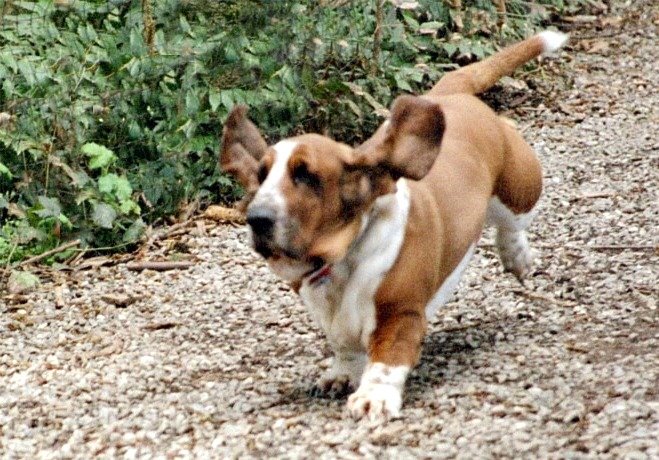 Once upon a time, Basset Hounds could fly as this primeval example demonstrates. They would flap their ears and slowly take wing. Sadly, like turkeys, they grew too heavy and now waddle along at low altitudes. When you hear them baying, it's their anscestral way of crying for the freedom of flight, now denied to their heavy limbed decendants.
It's good to be back home.
Monday, May 22, 2006
Random amusing articles

Skiing at Tucks in NH
Why Sun Valley has a 30% diversion rate for direct flights
I'm going to be in California for a week or so (no skiing though) so it'll be a little quiet here.
Plus, here's a goofy old skiing movie poster.
Saturday, May 20, 2006
Anti Skiing Terrorists Caught

Finally, the Dept. of Homeland Security has caught the terrorists who've been trying to sabotage Vail. These malcontents held back the expansion into Blue Sky Basin for some time, as I recall. Skiiers worldwide can now breathe easier knowing that these hatemongers will face justice.
The picture above is of the lodge they burned down, causing 12mm of monetary damage, and untold amounts of bad karma.
Anti-Skiing Terrorists To Face Justice of Man and Wrath of Almighty
Friday, May 19, 2006
Adventurer attempting to ski down Mt Everest is Missing
It looks like a Swedish adventure skiier, Tomas Olsson, has gone missing on Everest. Here's the article about it from an Everest news site.

There is a lure to the Himalayas that ensnares so many superb athletes. It seems an unusually hard way to die, with the odds of having your remains recovered low. May they find peace.
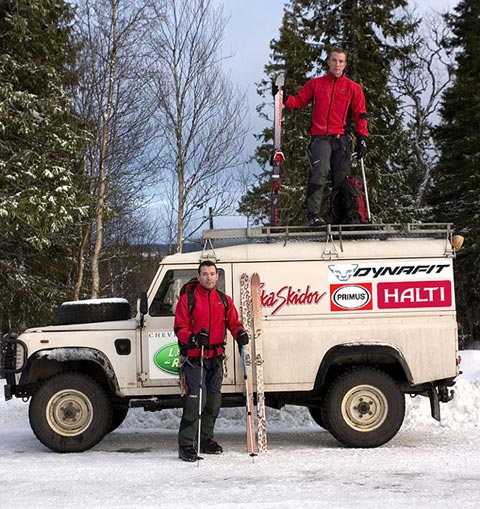
They have a cool web site with lots of excellent photographs , worth the click over to. That model of LandRover above (probably a 11o " Defender) has not been imported into the USA for something like 8 years, and they still command a premium.
Update on May 22: Himalayan Times on Recovery of Body
Thursday, May 18, 2006
Jackson Hole's tram plans

It looks like Jackson is going to rig up a chairlift to the top of their mountain, where the old big red Tram used to go. Here's what Skiing magazine has to say about it
Later on they will replace that with a modern tram. Here's a mockup of that. I only took the tram once -- the line was pretty long most of the time I was there, and the terrain it serves is quite steep, and beyond my comfort zone.

However, it's a useful tool for bragging rights -- no one else in the US can give you as much vertical in one lift, and all in one run, if you wanted.
Here is a picture of Waldo & Bagel at Jackson Hole
Wednesday, May 17, 2006
NYT Homage to Doug Coombs
I'm surprised, but the NYT decided to do a front page (at least on their web site) article on Doug Coombs. They have some photos I'd not seen before, including this picture taken from the very day of that ill fated run. (I wonder if this is the chute that took their lives)

Anyways you can read the rest of the article here. It's pretty good, and worth the click over. That must have been a terrible chute to go down afterwards by the remaining survivor, if he did not hike back up.
UPDATE JUNE 15: Memorial Service Details

Anyways you can read the rest of the article here. It's pretty good, and worth the click over. That must have been a terrible chute to go down afterwards by the remaining survivor, if he did not hike back up.
UPDATE JUNE 15: Memorial Service Details
Monday, May 15, 2006

Sunday, May 14, 2006

Friday, May 12, 2006
Interesting feature stories on skiers
This guys sounds pretty crazy: That's what lifts are for!
A nurse on the ski patrol: May I have some Novocaine?
And yes, what we have all been missing, the skiing rabbi: A Goretex Yarmulke
Have a great weekend, I'm heading up north and hoping that it won't be too drizzly.
A nurse on the ski patrol: May I have some Novocaine?
And yes, what we have all been missing, the skiing rabbi: A Goretex Yarmulke
Have a great weekend, I'm heading up north and hoping that it won't be too drizzly.
Thursday, May 11, 2006
A rescue on Mt. Hood

This is the story of a pretty amazing rescue of some skiers on Mt. Hood a few days ago. It (and the picture) are from SkiPress, which is a free weekly you can find in lots of ski shops and sporting goods stores. And here's a very similar story on the DoD's web site, since servicemen were involved in the rescue.
I hope none of us ever need the services of something like this, but it's heartwarming to know that there are people willing to risk themselves for those they will never know.
PS: This is pretty cool, a Google study of search trends on skiing
Wednesday, May 10, 2006
Possibly two new ski areas being developed
If you follow the ski industry, you know how difficult it is to get terrain added to existing mountains, much less open a new mountain. Happily, in the last year Idaho opened up Tamarack which looks like it could be a good one. It has lots of terrain and consistent snow, although like most of Idaho it is hard to get to and not close to metro areas (unless you count Boise as one). Prior to Tamarack the last proper destination resort established was Deer Valley, all the way back in 1980 (I think).
The main reasons it is so hard to open ski resorts are:
Land Ownership - most large parcels, especially in the West/Rockies, are owned by the government. If you can get a license / lease to use it , it typically requires either BLM or Forestry Service approval. It is difficult to have outright ownership and government leases can come with significant operating constraints.
Development - assuming you can surmount the first issue, there is a long path to developing the property. This includes cutting a road, clearing the ski runs, installing the machinery, building a base area, establishing lodging, food service and other amenities. If one is opposed in this process by environmentalists , NIMBYs , or others it can be difficult to impossible for this to happen. Filing and getting approval of an Environmental Impact Statement can be a multi year process. Some states have their own versions of this, additionally, such as Vermont with Act 250 rules.
Negative Macro Trends - the population of skiers / snow sliders has been stable/flat in the US for over 20 years. Over 500 smaller ski areas have closed during this time and a number of other areas, although still operating, have been in & out of the bankruptcy / foreclosure process. In addition, the average lift ticket is being sold to an older person each year ... because the user pool is not renewing itself with new younger consumers. A difficult torts / liability environment has also driven up operating costs, both in insurance premiums and in the safety procedures that resorts have to invest in.

Some of the implications of the above mean that most ski resorts cannot operate profitably without extensive real estate operations / development. The skiing on the hill typically can't support itself without the condo sales at the base. Fortunately (or not so fortunately) some of the negative trends have been counterbalanced by baby boomers' voracious demands for second homes, especially in resort areas. This has tended to prop up the areas that are well suited for development near the base (e.g. Vail, Okemo, Snowmass) while leaving some areas behind which are unable/unwilling to build out locally (e.g. Mt Bachelor, Bromley, Grand Targhee). The Vail Daily News picture on the right is of Battle Mtn in Colorado.
As someone who has a home somewhat near an area which has flitted in/out of bankruptcy (Magic Mountain) I've seen the damage that a stagnant area can inflict upon a local town and their property owners. Condos on mountain are worth maybe 1/3 to 1/2 of what they were when the mountain was operating. Local stores and restaurants are shuttered due the lack of visitors. It's unfortunate, and a warning sign that one needs to look at the health of the local attraction when buying into a resort area.
Anyways, it looks like there may be two new areas that could be built in the next decade or so, which is Good Thing. These take a long time to pan out, but we'll keep our fingers crossed.
Dyer Mountain in California
Battle Mountain in Colorado
The main reasons it is so hard to open ski resorts are:
Land Ownership - most large parcels, especially in the West/Rockies, are owned by the government. If you can get a license / lease to use it , it typically requires either BLM or Forestry Service approval. It is difficult to have outright ownership and government leases can come with significant operating constraints.
Development - assuming you can surmount the first issue, there is a long path to developing the property. This includes cutting a road, clearing the ski runs, installing the machinery, building a base area, establishing lodging, food service and other amenities. If one is opposed in this process by environmentalists , NIMBYs , or others it can be difficult to impossible for this to happen. Filing and getting approval of an Environmental Impact Statement can be a multi year process. Some states have their own versions of this, additionally, such as Vermont with Act 250 rules.
Negative Macro Trends - the population of skiers / snow sliders has been stable/flat in the US for over 20 years. Over 500 smaller ski areas have closed during this time and a number of other areas, although still operating, have been in & out of the bankruptcy / foreclosure process. In addition, the average lift ticket is being sold to an older person each year ... because the user pool is not renewing itself with new younger consumers. A difficult torts / liability environment has also driven up operating costs, both in insurance premiums and in the safety procedures that resorts have to invest in.

Some of the implications of the above mean that most ski resorts cannot operate profitably without extensive real estate operations / development. The skiing on the hill typically can't support itself without the condo sales at the base. Fortunately (or not so fortunately) some of the negative trends have been counterbalanced by baby boomers' voracious demands for second homes, especially in resort areas. This has tended to prop up the areas that are well suited for development near the base (e.g. Vail, Okemo, Snowmass) while leaving some areas behind which are unable/unwilling to build out locally (e.g. Mt Bachelor, Bromley, Grand Targhee). The Vail Daily News picture on the right is of Battle Mtn in Colorado.
As someone who has a home somewhat near an area which has flitted in/out of bankruptcy (Magic Mountain) I've seen the damage that a stagnant area can inflict upon a local town and their property owners. Condos on mountain are worth maybe 1/3 to 1/2 of what they were when the mountain was operating. Local stores and restaurants are shuttered due the lack of visitors. It's unfortunate, and a warning sign that one needs to look at the health of the local attraction when buying into a resort area.
Anyways, it looks like there may be two new areas that could be built in the next decade or so, which is Good Thing. These take a long time to pan out, but we'll keep our fingers crossed.
Dyer Mountain in California
Battle Mountain in Colorado
Tuesday, May 09, 2006
Mountain Driving
From the Summit Daily Crime Blotter on May 8.
-------
The rules of the road really do rule
Police were called to Copper Mountain recently for a driving complaint. The caller reported that he had been driving west on Copper Mountain Road toward the golf course when a car passed him on the right, then made an abrupt left turn in front of him. The slighted driver stopped to talk to the other driver and asked, "Where's the fire?" The man replied that he was driving too slow. The first driver wrote down the second driver's description and told the responding deputy where the man's car was parked. When the deputy asked the registered owner of the car what happened, he replied that the car in front of him had been driving too slow, so he passed him. The deputy informed the man that Copper Road was only one lane and passing is illegal. He replied that as far as he is concerned, it's a private road and it's two lanes because there is no designation that it is only one lane. The deputy reiterated that it is only one lane. "For me, it is two lanes," the driver replied. He landed himself a ticket for careless driving and improper mountain driving.
--------
What an idiot - these rural mountain roads (especially if they are undivided) are among the most dangerous roads to drive on on a fatality per mile basis. People drive fast, collisions tend to be of the deadly head on variety, and curves/gorges ensnare a fair number of folks too. It sucks to be trapped behind a logging truck, or a sluggish minivan, but its too dangerous to be playing Monaco GP out there.
-------
The rules of the road really do rule
Police were called to Copper Mountain recently for a driving complaint. The caller reported that he had been driving west on Copper Mountain Road toward the golf course when a car passed him on the right, then made an abrupt left turn in front of him. The slighted driver stopped to talk to the other driver and asked, "Where's the fire?" The man replied that he was driving too slow. The first driver wrote down the second driver's description and told the responding deputy where the man's car was parked. When the deputy asked the registered owner of the car what happened, he replied that the car in front of him had been driving too slow, so he passed him. The deputy informed the man that Copper Road was only one lane and passing is illegal. He replied that as far as he is concerned, it's a private road and it's two lanes because there is no designation that it is only one lane. The deputy reiterated that it is only one lane. "For me, it is two lanes," the driver replied. He landed himself a ticket for careless driving and improper mountain driving.
--------
What an idiot - these rural mountain roads (especially if they are undivided) are among the most dangerous roads to drive on on a fatality per mile basis. People drive fast, collisions tend to be of the deadly head on variety, and curves/gorges ensnare a fair number of folks too. It sucks to be trapped behind a logging truck, or a sluggish minivan, but its too dangerous to be playing Monaco GP out there.
Monday, May 08, 2006
An Apostate
I can't understand why you would take a job in a place like this if you did not care for the hobby/sport. To wit:
Spurning the Gift
Spurning the Gift
Friday, May 05, 2006
Special Lift Ticket Deals At Aspen for International Guests
Hmmm...I guess if one was going to actually take two weeks off for skiing this might make sense, but I wonder how much a season pass would cost. Or if someone is flying all the way from abroad (and taking two weeks off for skiing) wouldn't they be more likely to do a week in Aspen and a week in Vail?
------------------
Aspen/Snowmass in Colorado has announced an early booking offer for international guests, which offers six or eight days of free skiing and snowboarding on any of the resort’s four mountains: Snowmass, Aspen Mountain, Aspen Highlands and Buttermilk.
The “Buy 8 or more/Get 6 Days Free” offer and the new “Buy 12 or more/Get 8 Days Free” offer are available through any authorized Aspen/Snowmass international tour operator when a vacation package is booked before December 1st, 2006.
The offer is available for holidays after the Christmas/New Year period, from January 4th to April 15th, 2007.
------------------
Also these items
Excellent article on second home owners at Vail
More Delta Flights into Aspen
Snowpack going down
Summer fun at ski resorts
Happy Cinquo de Mayo folks.
------------------
Aspen/Snowmass in Colorado has announced an early booking offer for international guests, which offers six or eight days of free skiing and snowboarding on any of the resort’s four mountains: Snowmass, Aspen Mountain, Aspen Highlands and Buttermilk.
The “Buy 8 or more/Get 6 Days Free” offer and the new “Buy 12 or more/Get 8 Days Free” offer are available through any authorized Aspen/Snowmass international tour operator when a vacation package is booked before December 1st, 2006.
The offer is available for holidays after the Christmas/New Year period, from January 4th to April 15th, 2007.
------------------
Also these items
Excellent article on second home owners at Vail
More Delta Flights into Aspen
Snowpack going down
Summer fun at ski resorts
Happy Cinquo de Mayo folks.
Wednesday, May 03, 2006

Tuesday, May 02, 2006
Sunday, April 30, 2006
Thursday, April 27, 2006
Comparing ski towns (from the Tahoe News)
This looks interesting. I'll keep adding links as they put them up. These may need registration to log into. Try my email and college nickname to get yourself in.
Tahoe News Preface
Park City, Utah articles from the TDN.
Park City 1
Park City 2
Park City 3
I've always thought PC was a pretty great place.
Here are their pieces on Telluride (added Friday). It's darn hard to get there. All these proposals seem to suggest lots and lots of governmental intervention.
Telluride 1
Telluride 2
Telluride 3
Telluride 4
Some info on Jackson Hole.
Jackson Hole 1
Tahoe News Preface
Park City, Utah articles from the TDN.
Park City 1
Park City 2
Park City 3
I've always thought PC was a pretty great place.
Here are their pieces on Telluride (added Friday). It's darn hard to get there. All these proposals seem to suggest lots and lots of governmental intervention.
Telluride 1
Telluride 2
Telluride 3
Telluride 4
Some info on Jackson Hole.
Jackson Hole 1
Wednesday, April 26, 2006
Those charming ski maps

If you've ever wondered who creates and illustrates most of the trail maps for the ski industry, read about cartographer James Niehaus. His work is quite something; the work above is of my beloved Okemo.
CNN article on Niehaus
Tuesday, April 25, 2006
Excerpts from the Crime Blotter of Summit County (4/25/06)
(these are shamelessly filched from the Summit Daily News, link below) I suppose being a cub reporter on a small town newspaper must require some creativity, to wit:
Poached pants
A sheriff’s deputy was called to a condo clubhouse in Dillon Valley to speak to a woman who was missing a pair of pants from the dryer.
The woman said she’d been doing her laundry and discovered a pair of her boyfriend’s pants didn’t come of the dryer with the rest of the clothes.
She viewed the clubhouses surveillance tapes and saw a man take said pants, but she didn’t know who he was. However, she did know where the alleged thief lived. She led the deputy to the suspect’s apartment and he handed over the trousers he had taken from the laundry room. The man explained that he thought the pants were his, but couldn’t provide the brand of the pants. The deputy cited him for theft.
 Ready for the consequence
A sheriff’s deputy driving on Highway 6 recently witnessed a vehicle make a turn without signaling, so he pulled over the driver, who had slurred speech, watery eyes and had great difficulty locating his vehicle registration and insurance card.
When asked, the driver said he’d had four beers, and agreed to a sobriety test.
He failed.
While en route to the jail, the man admitted, “I deserve this. I’m not drunk now, but I’ve driven drunk so many times, I deserve this.”
He also requested to be booked into a cell with the biggest man “named Bubba in the jail.”
No word on whether his wish was granted.
More exciting police blotter stories on
Crime Blotter
Poached pants
A sheriff’s deputy was called to a condo clubhouse in Dillon Valley to speak to a woman who was missing a pair of pants from the dryer.
The woman said she’d been doing her laundry and discovered a pair of her boyfriend’s pants didn’t come of the dryer with the rest of the clothes.
She viewed the clubhouses surveillance tapes and saw a man take said pants, but she didn’t know who he was. However, she did know where the alleged thief lived. She led the deputy to the suspect’s apartment and he handed over the trousers he had taken from the laundry room. The man explained that he thought the pants were his, but couldn’t provide the brand of the pants. The deputy cited him for theft.
Ready for the consequenceA sheriff’s deputy driving on Highway 6 recently witnessed a vehicle make a turn without signaling, so he pulled over the driver, who had slurred speech, watery eyes and had great difficulty locating his vehicle registration and insurance card.
When asked, the driver said he’d had four beers, and agreed to a sobriety test.
He failed.
While en route to the jail, the man admitted, “I deserve this. I’m not drunk now, but I’ve driven drunk so many times, I deserve this.”
He also requested to be booked into a cell with the biggest man “named Bubba in the jail.”
No word on whether his wish was granted.
More exciting police blotter stories on
Crime Blotter
Sunday, April 23, 2006
I'm dubious, but wish them well

Trying to develop Burke Mountain
Burke is way up in the Northeast Kingdom part of VT, far away from anything except Canadians and polar bears. I'm not sure that either can afford expensive lift tickets and slopeside condos.
But hey, I wish them well. More ski areas is better.
Friday, April 21, 2006
A trip report from The Big Mountain in MT

This has to be the most exhaustive, well described ski trip report ever.
I am highly jealous. Kudos to the creators!
TBM trip report
Thursday, April 20, 2006

Wednesday, April 19, 2006
Another cool pair of links
One a skiier serving in Iraq
Skiier in Iraq
and two, a great deal on a season pass at Copper Mountain in Colorado
What a deal on a Copper pass!

Also an old colleague from work sent us some pictures from his Easter jaunt to the Stubai glacier in Austria. I've attached one picture from his set. It's a tricky engineering problem to build lifts on glaciers as the "ground" is shifting and you don't have much to anchor the lifts into.

Spring is here, and its getting to be time to put away those sweaters.
Skiier in Iraq
and two, a great deal on a season pass at Copper Mountain in Colorado
What a deal on a Copper pass!
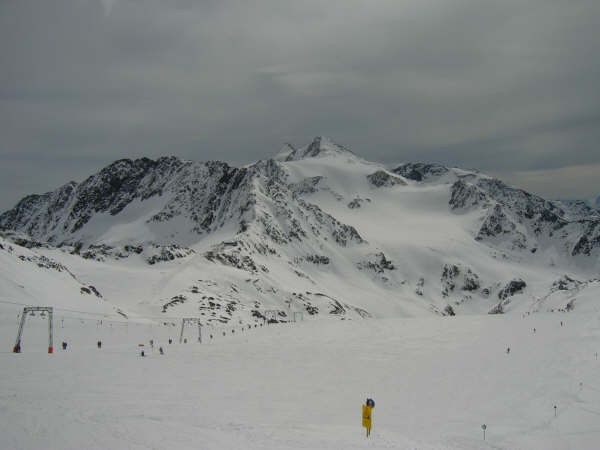
Also an old colleague from work sent us some pictures from his Easter jaunt to the Stubai glacier in Austria. I've attached one picture from his set. It's a tricky engineering problem to build lifts on glaciers as the "ground" is shifting and you don't have much to anchor the lifts into.
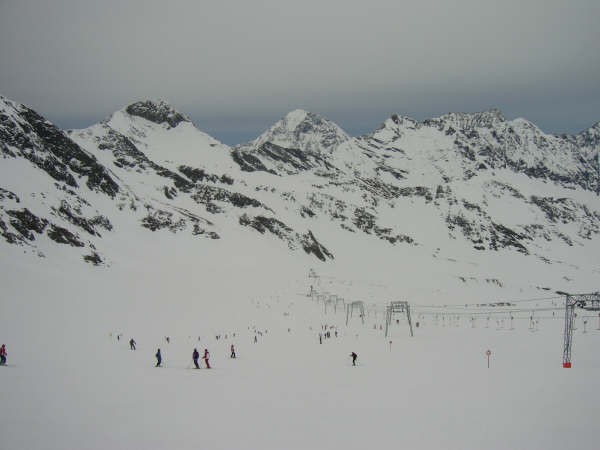
Spring is here, and its getting to be time to put away those sweaters.
Tuesday, April 18, 2006
Real estate sales still going crazy at Okemo
I think this is crazy money to spend for property that CAN NOT be a primary residence. What is even more unfair is that their taxes are higher than residents...and they can't even use the schools. Vermont has been sticking it to the second home owner (especially out of staters) for a long time. One more thing - by prohibiting residency that also stops the owners from being able to legally vote in that jurisdiction. Much easier to tax folks who can't vote, eh?
----------------
Buyers commit to $38.5M in Okemo housing
April 14, 2006
Rutland Herald Staff
LUDLOW — Potential stakeholders in Okemo's latest growth were given their first taste of Jackson Gore II real estate last weekend.About 100 people paid a $5,000 deposit to participate in Saturday's real estate selection event hosted by Okemo Mountain Resort owners Tim and Diane Mueller at the Jackson Gore Inn's Coleman Brook Tavern.Four hours later, the Muellers walked away with a $38.5 million commitment to the purchase of 65 new, whole-ownership residences at Jackson Gore II.This is the first time in more than a decade whole-ownership residences are being offered by Okemo.The Jackson Gore Phase II project consists of three residential buildings — the Adams, Coolidge and Bixby Houses.The Adams Building is a fraction-ownership property and offers a quarter share for one week a month, but Okemo public relations director Bonnie MacPherson said the resort wanted to offer an alternative. "We wanted to open up the market to a different clientele based on demand and what the market would bear," she said.In terms of construction, single ownership requires less need for locker and storage spaces.However, single owners will not be allowed to occupy the residence on a full-time, year-round basis as the Act 250 permit for Jackson Gore II stipulates.This was put in place so the Jackson Gore II facility did not place a burden on the area's municipal or educational services — a concern expressed during the Act 250 hearings by watchdog group Mount Holly Mountain Watch."It can't be someone's primary residence. That's very much intact," MacPherson said.A giant floor plan of the Coolidge House, with 35 units, and the Bixby House, with 30 units, was presented, and interested buyers were able to select residences at pre-construction prices.
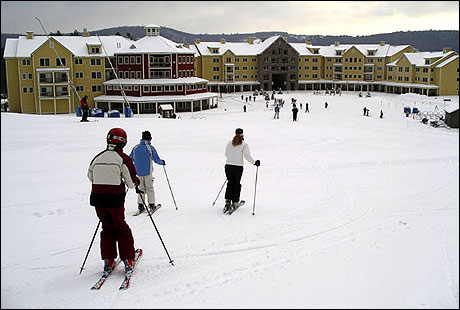 The residences vary in size from studio to three-bedroom condominiums, and commitments ranged in price from $378,000 to $2.2 million.MacPherson said the Jackson Gore II residences feature high-quality craftsmanship that demand a higher price.The selection process was a first for Okemo, and followed the success of a similar event at the Mueller's Crested Butte Mountain Resort in Crested Butte, Colo. Formerly, residences were offered through real estate listings and other traditional means.A 120-person capacity fitness center and a 500-person capacity conference center also are being built as part of the development.Construction on the Adams House and the fitness center is under way. Construction on the Bixby House is scheduled to start in early August.
----------------
Buyers commit to $38.5M in Okemo housing
April 14, 2006
Rutland Herald Staff
LUDLOW — Potential stakeholders in Okemo's latest growth were given their first taste of Jackson Gore II real estate last weekend.About 100 people paid a $5,000 deposit to participate in Saturday's real estate selection event hosted by Okemo Mountain Resort owners Tim and Diane Mueller at the Jackson Gore Inn's Coleman Brook Tavern.Four hours later, the Muellers walked away with a $38.5 million commitment to the purchase of 65 new, whole-ownership residences at Jackson Gore II.This is the first time in more than a decade whole-ownership residences are being offered by Okemo.The Jackson Gore Phase II project consists of three residential buildings — the Adams, Coolidge and Bixby Houses.The Adams Building is a fraction-ownership property and offers a quarter share for one week a month, but Okemo public relations director Bonnie MacPherson said the resort wanted to offer an alternative. "We wanted to open up the market to a different clientele based on demand and what the market would bear," she said.In terms of construction, single ownership requires less need for locker and storage spaces.However, single owners will not be allowed to occupy the residence on a full-time, year-round basis as the Act 250 permit for Jackson Gore II stipulates.This was put in place so the Jackson Gore II facility did not place a burden on the area's municipal or educational services — a concern expressed during the Act 250 hearings by watchdog group Mount Holly Mountain Watch."It can't be someone's primary residence. That's very much intact," MacPherson said.A giant floor plan of the Coolidge House, with 35 units, and the Bixby House, with 30 units, was presented, and interested buyers were able to select residences at pre-construction prices.
The residences vary in size from studio to three-bedroom condominiums, and commitments ranged in price from $378,000 to $2.2 million.MacPherson said the Jackson Gore II residences feature high-quality craftsmanship that demand a higher price.The selection process was a first for Okemo, and followed the success of a similar event at the Mueller's Crested Butte Mountain Resort in Crested Butte, Colo. Formerly, residences were offered through real estate listings and other traditional means.A 120-person capacity fitness center and a 500-person capacity conference center also are being built as part of the development.Construction on the Adams House and the fitness center is under way. Construction on the Bixby House is scheduled to start in early August.
Sunday, April 16, 2006
End of the line

By Joel Stonington (Aspen Times)
April 16, 2006
The Silver Queen Gondola is getting a face-lift after 20 years, and today is the last day to ride on the old cars (unless you buy one on eBay).
By July 4, new gondola cabins will be in place.
"It's kinda sad," said Sally Kleiner, of Colorado Springs, riding up on Saturday.
That just depends on your point of view.
"Frigging gondola ruined that mountain, if you ask me," Tony Vagneur said. "All those improvements they did around '86. Skiing Aspen Mountain was more of an adventure. Now it's like being at a roller rink."
Vagneur said getting to the top changed with the new gondola.
"It could be a 45 minute ordeal," he said. "It used to be the easy way up was up Little Nell, went over and got on 5, then you had to ski down and get on 3 to get to the top. You had to wait in line three times, basically. It was a long ordeal."
When the Silver Queen went in, it was the longest single-stage gondola in North America. But there were gondolas at Vail and Steamboat, so it wasn't hugely new. Just hugely different for Aspen.
"A lot of people were skeptical," said Don Boyer, maintenance lift manager for the Aspen Skiing Co. and an employee since 1969. "Some of these guys that had skied Aspen for years and years said, 'Wow, we can ski top to bottom.'"
Boyer said workers have already started taking gondolas off the lift and are currently running at about three-quarters capacity.
"We have to make some changes in the terminals," he said. "We have to tear up the floor in the top terminal and do some other stuff so the cars can get in there. The speed will be about the same. This will be phase three of what we've been doing. This spring is the final phase."
The gondola will be wheelchair accessible, so the entrance to each cabin will be flush with the ground.
"I think it'll look really sharp for the city," Boyer said. "Fireworks will be unbelievable shining off those new cabins."
Thursday, April 13, 2006
Changes afoot in Sun Valley & Ketchum ?
Sun Valley seems to be trying to radically change their main downtown, in Ketchum. Here's the Adobe presentation on it.
Ketchum master plan
News article on it as well

And here's what they are trying to do to the mountain over the next ten years, from plans filed with the Forest Service.
Forest Service Filings
News reports on filings
Ketchum master plan
News article on it as well
And here's what they are trying to do to the mountain over the next ten years, from plans filed with the Forest Service.
Forest Service Filings
News reports on filings
Wednesday, April 12, 2006
Tuesday, April 11, 2006
Utah catching up to Vermont in ski biz (AP)
Associated Press
April 10, 2006
SALT LAKE CITY - Utah's skiing governor, Jon Huntsman, hit the slopes Saturday as industry officials gave an early assessment of the 2005-06 season, saying the total number of skier visits was fast approaching 4 million.Utah, the No. 4 skiing state, could move up a notch and replace Vermont, which usually tops 4 million skier visits but suffered from a shortage of winter snowfall, with many of its ski areas opening late and closing early this season.Ski areas in Utah's Wasatch Range, by contrast, have had about 50 feet of snow since October, with three feet falling last week. The mountain snowpack is 171 percent above normal, the National Weather Service reports. The resorts got even more snow last winter, when Snowbird had skiing for 205 days straight.The resorts could match last winter's record of 3.9 million skier visits, up 12 percent, even with a shorter season, said resort executives and Nathan Rafferty, president of Ski Utah.Snowbird, about 18 miles east of Salt Lake City, had its busiest March for skier visits and lodging, resort spokeswoman Laura Schaffer said.Executives at other Utah resorts said their numbers were up, too, although for competitive reasons the 13 independently owned resorts don't release figures. Ski Utah compiles and releases a single figure for all resorts at the end of the season.Rafferty said Utah's final numbers will depend on traffic in the final weeks of the season.Most Utah resorts will close next weekend, except for Snowbasin, which plans to stay open until April 23. Snowbird, a year-round resort, will offer skiing until the end of May.The resorts don't close for lack of a snowpack but for interest, as skiers switch to playing golf, riding bicycles or mowing lawns. Even as they lose customers, resorts stay open for weeks, just to show they can, said Gary DeSeelhorst, president of Solitude Mountain Resort, which is staying open until April 16."April will be a bummer financially. There's no question," he said.
Stealing from Colorado?Overall, Utah resort officials think they're taking traveling skiers from No. 1 Colorado, which logged 11.81 million skier visits last winter, but industry officials in Colorado say they're not seeing any losses."Certainly we're looking at a record year," said Molly Cuffe, communications director for Colorado Ski Country USA. "Right now we're on track to hit 12 million skier visits - we've gotten close to that number in the past, but it's always eluded us."Half of Vermont's ski areas closed weeks ago. Mad River Glen ski area, a cooperative owned by skier-shareholders, had its worst winter in a decade and shut down March 13, Mad River's President Jamie Wimble said."We are definitely in the red for this year," Wimble said. On the plus side, "we have no debt and a low overhead."At Solitude, about 18 miles east of Salt Lake City, skiers were cruising on slopes with 14 feet of packed snow on Saturday.Huntsman said the secret was getting out, thanks in part to the 2002 Winter Olympics - that Utah resorts have good skiing, abundant snowfall and quick access from Salt Lake City's airport. Eight resorts are within a 45-minute drive of the airport. Huntsman said the ski industry contributes nearly $1 billion to the Utah economy."How is it that we can have it so well?" he asked.Huntsman rates himself an intermediate skier but was seen racing down the slopes ahead of his bodyguard and other companions. Rafferty said he barely had time to buckle his boots on the first run before Huntsman took off."He skis like a rocket," Rafferty said.
April 10, 2006
SALT LAKE CITY - Utah's skiing governor, Jon Huntsman, hit the slopes Saturday as industry officials gave an early assessment of the 2005-06 season, saying the total number of skier visits was fast approaching 4 million.Utah, the No. 4 skiing state, could move up a notch and replace Vermont, which usually tops 4 million skier visits but suffered from a shortage of winter snowfall, with many of its ski areas opening late and closing early this season.Ski areas in Utah's Wasatch Range, by contrast, have had about 50 feet of snow since October, with three feet falling last week. The mountain snowpack is 171 percent above normal, the National Weather Service reports. The resorts got even more snow last winter, when Snowbird had skiing for 205 days straight.The resorts could match last winter's record of 3.9 million skier visits, up 12 percent, even with a shorter season, said resort executives and Nathan Rafferty, president of Ski Utah.Snowbird, about 18 miles east of Salt Lake City, had its busiest March for skier visits and lodging, resort spokeswoman Laura Schaffer said.Executives at other Utah resorts said their numbers were up, too, although for competitive reasons the 13 independently owned resorts don't release figures. Ski Utah compiles and releases a single figure for all resorts at the end of the season.Rafferty said Utah's final numbers will depend on traffic in the final weeks of the season.Most Utah resorts will close next weekend, except for Snowbasin, which plans to stay open until April 23. Snowbird, a year-round resort, will offer skiing until the end of May.The resorts don't close for lack of a snowpack but for interest, as skiers switch to playing golf, riding bicycles or mowing lawns. Even as they lose customers, resorts stay open for weeks, just to show they can, said Gary DeSeelhorst, president of Solitude Mountain Resort, which is staying open until April 16."April will be a bummer financially. There's no question," he said.
Stealing from Colorado?Overall, Utah resort officials think they're taking traveling skiers from No. 1 Colorado, which logged 11.81 million skier visits last winter, but industry officials in Colorado say they're not seeing any losses."Certainly we're looking at a record year," said Molly Cuffe, communications director for Colorado Ski Country USA. "Right now we're on track to hit 12 million skier visits - we've gotten close to that number in the past, but it's always eluded us."Half of Vermont's ski areas closed weeks ago. Mad River Glen ski area, a cooperative owned by skier-shareholders, had its worst winter in a decade and shut down March 13, Mad River's President Jamie Wimble said."We are definitely in the red for this year," Wimble said. On the plus side, "we have no debt and a low overhead."At Solitude, about 18 miles east of Salt Lake City, skiers were cruising on slopes with 14 feet of packed snow on Saturday.Huntsman said the secret was getting out, thanks in part to the 2002 Winter Olympics - that Utah resorts have good skiing, abundant snowfall and quick access from Salt Lake City's airport. Eight resorts are within a 45-minute drive of the airport. Huntsman said the ski industry contributes nearly $1 billion to the Utah economy."How is it that we can have it so well?" he asked.Huntsman rates himself an intermediate skier but was seen racing down the slopes ahead of his bodyguard and other companions. Rafferty said he barely had time to buckle his boots on the first run before Huntsman took off."He skis like a rocket," Rafferty said.
Monday, April 10, 2006
A collector of vintage ski gear

Article on Collector
Here's their web site
Their collecton of reproduction posters is most impressive.
Sunday, April 09, 2006
Greatest dog day ever
There were more people saying "sit," "down," and "good dog" all in one place Saturday at Buttermilk than at any other time of year. And the hundreds of doggies were running around sniffing each other, barking, chasing balls, licking things and enjoying the sunshine.Yes, another successful Canine Uphill (the 11th annual) at Buttermilk.Emmy, Wren, Oliver and Grace were there with their owner, Mary Kobey. The four poodles each had on a frilly collar. "It's probably very silly," Kobey said, "but we thought it would be fun. They're a handful, but poodles are smart, easy dogs."Indeed, Emmy, Wren, Oliver and Grace were not barking their heads off like some of the dogs there. They were just chilling out, sniffing interesting things and looking stylish.For some, it was just an average dog day, but a major idea behind the uphill is to spread consciousness about abandoned dogs."We raise a substantial amount of money for dog food and that sort of thing [for shelters in the area]," said one of the organizers of the event, Greg Gissler. "Dogs get abandoned in bad situations. This is about taking care of animals in the valley."Hence, the Animal Rescue Foundation brought 10 or so dogs to be walked and hopefully adopted, Valley Dog Rescue brought another 10, and some people drove over to the Aspen Animal Shelter to pick up a dog for the day. Leila, from the Aspen Animal Shelter, got to walk with Kerek Swanson of Blue Lake. Before the race, Leila, a small terrier/lab mix, was sitting on Swanson's lap looking around, ears perked, happy as a clam. "It's a way I can have a dog without having one," said Swanson, who mentioned he doesn't have the ability to adopt a dog right now, "plus, it gets him out of the kennel for a day."Courtney Sorrell, of Aspen, lucked out and ended up with Reno from the Animal Rescue Foundation. Reno was the winner of last year's event."I told him, 'I'm not racing, I'm walking,'" said Sorrell, to somewhat ashamed and hurt looks from Reno.Yeah, just like the people, some of the dogs there had that competitive spirit and some just didn't. All the competitive types gathered up front for the beginning of the race, while the recreationals stayed behind. For a few minutes, while everyone was standing there, dog barks filled the air and leashes were pulled tight. Then the race began, and 20 seconds later the bottom of Buttermilk was silent. Looking up, all that could be seen were hiking people and wagging tails. The race was followed by a raffle and barbecue."With hot dogs," Gissler said, "of course."
(from the Aspen News)
(from the Aspen News)
Saturday, April 08, 2006
3 Die in Mammoth Ski Patrol Accident

Two men fall into a volcanic vent while fencing it off. A rescuer also is killed and seven are hurt. Resort's death toll this year hits eight.
By Amanda Covarrubias and Doug Smith
LA Times Staff Writers
April 7, 2006
Three ski patrol members were killed Thursday at Mammoth Mountain ski area when they fell into a geothermal vent that they were working to fence off. Seven other ski patrollers were injured in the incident.
The deaths bring the total this year to eight at the popular Eastern Sierra ski resort, which broke its all-time snowfall record Tuesday. This winter season has been a deadly one for California, with at least 13 skiers dying.
In the wake of a blizzard, four patrollers had been working Thursday morning on the barrier around the natural vent — a crevasse through which toxic subterranean gases escape — to keep skiers from the dangerous opening. Mammoth, which rises to 11,053 feet in an active volcanic area, has several such vents, also called fumaroles.
"The gas levels were very high, and when the patrollers first went to fence it off, there was a lot of snow, but the opening was quite small," Mammoth Lakes Mayor Rick Wood said. "There was a 12-foot-wide cave, 22 feet deep. What happened is two of the four patrollers fell through the hole and the snow gave way. Two went in after them, and only one survived."
Members of the ski patrol, firefighters and paramedics responded. The seven injured patrollers — six of whom responded to the accident — were taken to Mammoth Hospital in Mammoth Lakes, where most were expected to stay overnight, Wood said.
The names of two of the dead ski patrol members, all men, were being withheld until family members could be notified. The Mono County coroner has not determined whether they died from the fall or from inhaling toxic fumes.
One of the dead was Charles Walter Rosenthal, a researcher for UC Santa Barbara who jumped in to help his two fellow patrollers who had fallen into the vent. University spokesman Paul Desruisseaux said Rosenthal, a married father in his 40s, worked at the Sierra Nevada Aquatic Laboratory in Mammoth Lakes. He was the president of the Eastern Sierra Avalanche Center and an expert in snow hydrology and remote sensing of snow.
Mammoth Mountain officials, skiers and ski patrollers were still trying to absorb the latest tragedy to hit the community about 300 miles north of Los Angeles, a snow sports destination that draws 1 million visitors a year, many from Southern California.

Earlier this year, five people died at Mammoth and a member of the Mammoth ski patrol was killed in an avalanche nearby. In a normal season, three people die in accidents or from natural causes at the resort. Last season, only two people died.
"Whenever you have something like this in a small town, it touches everyone," said Craig Stadtmueller, pastor at Grace Community Church of Mammoth Lakes. "Even though I'm new here, I can't help but be affected by this because everyone I know is affected."
Ski patrol members, who are trained in rescue and first aid, respond to accidents, trigger avalanches to release built-up snow and erect barriers to hazards.
Michael Fanelli, the National Ski Patrol's director at the Northstar ski area in Lake Tahoe, said fatal ski patrol accidents are extremely rare. Before the death of the off-duty Mammoth ski patroller this season, Fanelli said he knew of fatal accidents only in the Rocky Mountains.
"In the last 10 years, I have not heard of any patrollers killed in California," he said.
Jeff "Jake" Smith, 27, who patrolled at Alpine Meadows, was killed in 1982 as he tried to warn skiers to flee a danger zone. An avalanche smothered him and five other skiers. In 1985, a 9,000-foot peak above Lake Tahoe was named Jake's Peak in his honor.
At Mammoth on Thursday morning, the ski patrollers were moving the fencing around the vent near the Christmas Bowl on the upper mountain when the accident occurred at 11:29 a.m. The area where the accident occurred had been closed because of heavy snowfall. As of Wednesday, Mammoth Mountain had recorded 632 inches, or 52 feet of snow since October. The previous record of 617 inches was set in 1992-93.
David P. Hill, the scientist in charge of the U.S. Geological Survey's Long Valley Observatory in the Mammoth area, said the accident occurred at a well-known geologic feature called the Mammoth Mountain fumarole, a vent that releases water vapor and carbon dioxide from deep within the earth. There are a couple of other, smaller fumaroles on the mountain.
The vents, which emit a slight rotten-egg smell, are relatively harmless in summer when the gas dissipates into the atmosphere. "The problem comes in the winter when the snow builds up and covers this thing," Hill said. Hill said the heated gas can melt a cavity below the surface snow.
The area had already been cordoned off so that skiers would not inadvertently cross over it. "They were trying to move the fence further back from the fumerole to protect skiers because they knew it was dangerous," said Hill, who talked to Mammoth Mountain officials. "They were doing the right thing. They were just unlucky."
Mammoth Mountain stands on the southwest rim of the Long Valley Caldera, part of a volcanic chain that extends to Mono Lake. High concentrations of carbon dioxide have been seeping to the surface since a 1989 earthquake and have killed more than 100 acres of trees on Mammoth Mountain.
Volcanic gas emissions are believed to have caused at least two California skiing deaths. In 1998, a 58-year-old cross-country skier from Torrance in good physical condition died in nearby Horseshoe Lake. He was found face down, and he was believed to have died from "carbon dioxide toxicity," according to the Mono County coroner. In 1995, a cross-country skier fell into a fumarole in Lassen Volcanic National Park and survived a week before succumbing to the effects of inhaling toxic fumes.
After blizzard conditions Wednesday, Thursday was a beautiful, clear day on the mountain, with temperatures in the 50s.
Skiers in line to board the gondola to the top first learned that an accident had occurred after a lift attendant suddenly announced, without elaborating, that "the top of the mountain was closed." But within seconds, a skier in line got a call on a cellphone and then told a friend that a ski patroller had died.
Word spread quickly, and the accident was the talk of the slopes, though details were scarce. Skiers saw the emergency vehicles staging at the base of the mountain.
The deaths were another blow to the well-regarded ski patrol, which lost Sara Johanna Carlsson, 31, a native of Sweden, in January when she was killed in an avalanche skiing off-duty near Bridgeport with two other Mammoth ski patrol members.
"When you have folks doing what they are paid to do and falling into a vent, it's close, it's personal and it ripples throughout the community," said Wood, the Mammoth Lakes mayor. "There's a collective feeling of devastation you cannot measure. These are the unheralded heroes who make the mountain work. They're the guys who make it an enjoyable, safe place to ski."
Mammoth to honor fallen patrol
--------------------------------------------------------------------------------
Times staff writers Steve Hymon, J. Michael Kennedy and Hemmy So in Los Angeles and Jeffrey M. Johnson in Mammoth Lakes contributed to this report.
Friday, April 07, 2006
Four seasons of skiing at A-Basin

I had a great day skiing Arapahoe at Eastertime some years ago. For those of you who are able, it's not far from Denver at all. If you are prone to altitude sickness, the Basin is pretty high up. I remember feeling light headed there.
--------------------------
Four seasons of skiing at A-Basin
DAILY NEWS STAFF REPORT
March 6, 2006
Arapahoe Basin gets better with age, and after nearly 60 years in business, The Legend, as it is affectionately known, is still going strong.
The ski area has managed to stay true to its down-home tradition while changing with the times. In recent years, the Basin has added a terrain park and snowmaking to stay up-to-date with the changing ski industry.
But one thing that doesn’t change is the terrain. It’s mostly above treeline and varied enough to satisfy all ability levels yet challenging like no other.
The steep and bumped-up Pallavicini area is a playground for experts, while A-Basin’s lower east side offers mellow cruisers for beginners and intermediates.
The famed East Wall looms higher up the mountain. It usually opens in February or March, when the base depth covers the rocky terrain. Peaking at more than 13,000 feet, the wall serves up rock chutes and steep faces as well as powder stashes for those willing to hike to the top.
It’s thrilling terrain that earns its legendary status.
Let’s not forget that A-Basin has the longest ski season in the country, opening in October (now that the snowmaking guns are pumping it out) and closing after the summer solstice most years. Arapahoe shoots for July 4 as a closing date.
Those spring and summer days are part of the ski area’s story as riders and partiers alternate runs with burgers and beers at the base of the mountain — which has come, over the years, to be known as the Beach.
SKI magazine on a day at the Beach
Thursday, April 06, 2006
Snow at Okemo...in April ?!?

It snowed 2"-4" up at Okemo.... picture from this morning
Maybe with luck I can get a few runs in!
Wednesday, April 05, 2006
Doug Coombs killed in La Grave on Monday

Some of you may remember how he was expelled from Jackson Hole a few years ago, made permanently persona non grata for going outside the ropes. He moved to La Grave, starring in all kinds of lunatic Warren Miller-esque films. Even though I would/could never even contemplate his camps or the terrain he purveyed -- I got a vicarious thrill in hearing about his exploits over the years.
Master of the Steeps killed in fall
Summit Article on the Deaths (reg required)
Interview with Coombs
Denver Post's article
Powder's Tribute
Here is a fairly signature pix of him, going down a chute that goats would be foolish to attempt.
Rest in Peace.
Tuesday, April 04, 2006
Late Season Secrets

(from the current SKI magazine)
Being in on a secret makes you feel smart. Acting on inside info means you are smart. Let others wind down their ski season in the spring: Smart skiers know that the best is yet to come.
Best Spring Powder:
Alta, Utah
Why: Alta spring powder? That’s redundant. Last season hit 697 inches—including 165 in March (that’s 5.32 inches per day). And the real beauty of any Salt Lake resort is accessibility: about an hour from baggage claim to the lifts.
How: Follow the forecasts, and sniff out lastminute airfare deals: You can wake up on the East Coast and be snorkeling untracked off Devil’s Castle by lunch. Bring (or plan to rent) fat skis.
Local tip: Wasatch Powderbird Guides (powderbird.com) delivers the goods days after a storm. Sometimes you’ll have to settle for perfect corn (sigh), but spring rates (after March 20) are hot ($595–$665 per day). And call to see if there’s a cheap seat due to a noshow or a cancellation.
Other options: There’s nearby Snowbird, where the lifts were open on July 4 last year. And keep an eye on the Northwest, where spring dumps often push season totals past the 600-inch mark on the volcanoes—Baker, Bachelor, Hood—and are often followed by something rarely seen during the winter: blue skies.
Don’t miss: Last run of the day on High Rustler. Pause to admire the sunset, lay down some sweet arcs, then study them from the lodge over an après beer.
Best Spring Festivals:
Whistler/Blackcomb, B.C.
Why: The TELUS World Ski and Board Festival is the biggest on-snow party on the globe. The annual bacchanalia jam 10 days (April 14-23) with skier – and boardercross competitions, film and art events, more than 50 concerts and, of course, Whistler’s rockin’ nightlife.
How: Stay close to the action at the refurbished Sundial Boutique Hotel in Whistler Village. Their Spring Ski package gets you four nights in a onebedroom suite and two three-day lift tickets for $1,760 (800-661-2321; sundialhotel.com).
Local Tip: Head to Down Under (formerly Maxx Fish) to groove with the cool crowd. Located in Whistler Village, under the Amsterdam Café.
Other Options: Copper Mountain, Colo.’s Sunsation Festival, April 1–2, 8–9 and 15–16, caters to the twin-tipped set with hip-hop-heavy concerts and the requisite Eenie- Weenie Bikini Contest (coppercolorado.com). At Squaw Valley, Calif., spring is sprung with Spring Jam 8 (April 15–16), and with on-mountain events such as the stripped-down Undie 500 (squaw.com).
Don’t miss: The Pro Photographer Showdown on April 19. Five action sports shooters each assemble a nine-minute show of their best images. Judges pick a winner.
Best Spring Culture:
Killington, VT
Why: Nobody things up more excuses for a spring fling that Killington: Bear Mountain Mogul Challenge (April 1-2) and Sunshine Daydream (April 15), for instance. And nobody is the East has better late snow. Why? Good planning. Starting around Halloween, Killington lays down 20 feet or more of snow on Superstar, just so you can bash corn bumps in the spring sun.
How: Ray-Bans and sunscreen are a good idea. Screaming cold beer, too. Pick a sunny day and break out your ultrasoft skis. Check the temperature. If necessary, wait till the sun softens things up.
Local Tip: Arrive early on a sunny day and score a Killington Road parking space within feet of the Superstar Quad. Meet many new friends.
Don’t Miss: The Spring U.S. Freestyle Championships, March 23-26, on Bear Mountain. Post-Olympics, watch the U.S. freestylers fly high.
Other Options: You can’t camp overnight at the beach at Arapahoe Basin, Colo., any more, but it’s still pretty damn fun during the day. At Whistler, the action on Horstmann Glacier heats up as the days grow long.
Best Midwinter Conditions:
Big Sky, Mont.Why: At Big Sky, spring tends to arrive sometime in early summer. This lets winter work the room for just about all of ski season. Calendar pages are flipped, but the conditions beneath your skis almost always feel like January. Dirt patches? Rocks to avoid? Mud? Don’t make Big Sky skiers laugh. “We always run out of skiers before we run out of snow,” a resort worker says. How: Book five nights in any Big Sky resort property, and two adults ski for free, April 1–16. Prices start at $440 per person (800-548-4486, bigskyresort.com).Local tip: Overdress. The summit tops out at 11,150 feet, and high temperatures in March can stubbornly stay below 20 degrees. And with Big Sky boasting one of North America’s longest vertical drops—4,350 feet-—you don’t want to ski to the bottom to pick up an extra layer.
Other options
Jay Peak, Vt., boasts the East Coast’s only tram, reports the region’s biggest snow and regularly hosts conditions that defy global warming.
Sunshine Village, Alberta, remains open until May 22—for good reason.Don’t miss: Ambush Glades off the Ramcharger high-speed quad. Even the local hardcores can’t resist skiing the Lone Peak Tram, so head to the other side of the mountain.
Best Secret Solitude:
Vail, Colo. Why: One of spring’s best-kept secrets is that maxed-out megaresorts go mini in late spring, as crowded slopes you avoid like taxes in midwinter open up late in the season. During the last week in March, Vail averages three skiers per acre. That drops off to two skiers per acre in early April and only one person sharing your personal space by month’s end. To top it off, prices fall and the mountain often closes with some of the best conditions of the season.How: Get four days’ skiing and lodging in a two-bedroom condo for $248 per person during Spring Back to Vail weeks, April 3–16. Want silence and solitude at Vail? Boogie down Blue Ox in April.Don’t miss: Experience the frontside like you can’t in January: with room to roam. Appreciate the old-school lines of Riva Ridge and the classic bumps on PPL (Prima, Pronto and Log Chute) without a critiquing audience looking down their noses from above and below.
Other options:
Stowe, Vt.’s clientele grab golf clubs, not boards, in late spring, opening up the slopes for smart skiers.
Join the locals on the snows of Squaw Valley, Calif., as the San Fran drivers and shakers move on to warmweather pursuits.
Local tip: Shoulder a small backpack and throw in a water bottle and an extra layer to wear on the lifts. With Vail’s 5,289 acres, there’s a lot of heating up and cooling down.
Best Spring Tradition:
Tuckerman Ravine, N.H.Why: Diehard skiers have been hiking into Tucks since pine tar first hit hickory boards. Now it’s a rite of spring passage for the earn-your-turns set, who gather annually to send winter off with gusto—and two runs of super-steep corn turns.How: Carefully! Tucks can be tame as a kitten or quite menacing, depending on weather and snow/avalanche conditions. Check out tuckerman.org for both. And be ready for a 3-mile hike to the base of the ravine. Dress in layers, wear real hiking boots, and bring a good pack to haul your skis, boots and gear.
Other options:
Stowe’s Sugar Slalom (April 1–2) always draws a big crowd for all-ages racing and syrup-onsnow.
Sugarloaf’s Reggae Festival (April 6–9) draws upwards of 10,000.Local tip: If the weather’s nice, consider a push from the lip of the ravine to the summit of Mt. Washington, where you’ll find gentler snow- fields and spectacular four-state views rarely matched in the East.
Don’t miss: In a deep snow year, you can ski from the floor of the ravine back down to the Visitor’s Center on the Sherburne Trail, a CCC creation and one of the nation’s oldest ski trails. Beats the heck out of down-hiking.
Best Corn Snow:
Kirkwood, Calif.Why: Kirkwood serves up the sweetest corn this side of a Jolly Green Giant can. The recipe: Mix 500 annual inches with nearly 300days a year of sun. Veteran skiers know that the only buzz to rival a powder rush is the ego blast from ripping long, uninterrupted lines of corn snow.How: Harvesting spring corn is all about timing. Start with a few let-’emrip runs down Eagle Bowl, then follow the sun over to Palisades and Lightning. Grab a deck lunch at The Wall and enjoy the views. Reheat your legs on Lost Cabin and Monte Wolfe before putting a bow around the day on Saddle Chute.Don’t miss: In the afternoon, hit The Wall, a steep, big-vert heartpounder that is, frankly, a handful in midwinter hard-snow conditions. But in the spring, the corn sets up perfectly, your edges hold like Super Glue and you can arc down the fall line, top to bottom, just like in the good ol’ days.
Other options:
Colorado’s Durango Mountain Resort is a natural terrain park. In the spring, it’s a natural terrain park covered with ego snow.
In California, Mammoth Mountain’s feel-good spring snow is as grippy and inviting as a third date.
Idaho’s most famous crop after potatoes? Sun Valley Corn.
Local tip: Don’t ski in a T-shirt. You’ll be skiing fast and feeling bulletproof. Expect a few full-body slides. Long sleeves prevent snow rash.
Best Spring Deal:Ritz-Carlton Bachelor Gulch, Beaver Creek, Colo.Why: The Ritz is the essence of luxury in the mountains, and room rates melt away every April. (That $650 room in January goes for $275 in late spring.) Beautiful on the inside and out, the hotel counts service and amenities as its mission.How: The hotel’s Late Winter Ski Package features a room and two three-day lift tickets from $315 per night (four-night minimum stay required).Local tip: Check out the martini menu on the slopeside deck of the Beaver Creek Chophouse.Don’t miss: Dinner at Zach’s Cabin, located on Bachelor Gulch and accessed by snowcatpulled sleigh (reservations required, 970-845-6575).
Other options:
In Deer Valley, Utah, the Bronze package at the Stein Eriksen Lodge gets you a room, lift ticket and spa visit for $259 per person, per night (steinlodge.com).
At Aspen’s Hotel Jerome, the Ski Deal package includes a room, lifts and shuttle service for $320 per room, per night (hoteljerome.com).
Monday, April 03, 2006
An even better way to "road trip"
Roadtripping from Jackson Hole to Targhee to Sun Valley in an RV
And thoughts on the scary Teton Pass (what one has to take to get to/from Targhee and Jackson)
People whining about Teton Pass
And thoughts on the scary Teton Pass (what one has to take to get to/from Targhee and Jackson)
People whining about Teton Pass
Sunday, April 02, 2006
Closing time

Highlands, Buttermilk call it a year
By Chad Abraham April 3, 2006
After a bluebird day with fresh powder, the lifts at Buttermilk and Aspen Highlands went silent Sunday.The closing days at the family ski area and the locals' Mecca could hardly have been more different. Some 32,000 Corona beer bottles were expected to be quaffed at Highlands, a bartender said.Things were quieter at Buttermilk. A few minutes before 3:30 p.m., when the last lift of the season rose up lower Tiehack, lift worker Juan Francisco Rubio and two colleagues were busy putting the finishing touches on their craft for today's Cardboard Downhill. The race, part of Buttermilk's employee ski day, will be at 10 a.m. today.Just after 3:30, Melissa Torcivia, another lift worker, called up to the upper lift shack with the number of the last chair of the season holding a person.Lift supervisor Joey Woltemath of Carbondale occupied Chairlift No. 21. After 12 years at Snowmass, this winter was her first at Buttermilk."We're all glad it's over; we had a really great year," she said. "When we have snow, it makes our job a lot easier."Buttermilk closed with 5 inches of fresh powder atop a 48-inch midmountain base.The ski area, while in the shadow of its three sister resorts, "is making a move," Woltemath said. "Our skier days have gone up this year."And the annual ESPN X Games "puts us on the map," she said. "You see a lot more families coming out here and it's great to see the kids. Today, we didn't think we'd be as busy as we are, and it's all families."After her lift ride, Rubio pressed a red button to stop the lift, and the machinery inside the lift tower rumbled to a stop. Silence engulfed Tiehack as an orange mesh strap that said "Lane Closed" was strung near the lift's entrance.A skier descending through the slush soon broke the silence. Taking off his boots in the parking lot, Billy Shank of Carbondale said he normally skis Aspen Highlands on closing day. But the party has grown too large, he said."It's gotten to be such a zoo. Looking from atop [Tiehack], it looked like it was crawling with ants," he said.
Over in the ticket office at Buttermilk's main base area, Pat Otte and Marsha Breudlinger were busy stocking away supplies for next winter."We've been busy, customerwise. It's been very constant," Breudlinger said.She said she had mixed emotions about closing day."Not seeing our foreign students makes you feel really sad," she said. "As far as quitting working, we're all happy about that. Same way you'd be."At Highlands, hundreds and hundreds of patrons kept bartenders in a frantic state, forgoing individual bottles of beer for six-packs, pitchers and shots.Around 5 p.m., bartender Gaston Figueroa of Corrientes, Argentina, said Iguana's had sold about 500 cases of beer.Highland Bowl seemingly had about as many people. Atop the bowl earlier in the day, a man in a lizard leotard passed around champagne.Around 5:15 p.m., ski patrol set off explosives on the ridge above the base area to mark the final day.Dogs peed on skis on the hill just above the bar, and the colorful crowd cheered the first ski patroller who skied down, his fists thrust triumphantly in the air.
Subscribe to:
Posts (Atom)


 Posts
Posts


